
Enhanced Anaerobic Oxidative Bioremediation
What Is Enhanced Anaerobic Oxidative Bioremediation?
Enhanced anaerobic oxidative bioremediation stimulates naturally occurring microorganisms by supplying alternative electron acceptors to support contaminant biodegradation in oxygen-depleted aquifers. Unlike aerobic bioremediation, which relies on dissolved oxygen, this approach promotes the microbial oxidation of contaminants using alternative electron acceptors such as sulfate or nitrate. During these processes, microorganisms metabolize organic contaminants while reducing the supplied electron acceptors, ultimately transforming contaminants into carbon dioxide, water, and other naturally occurring byproducts.
In many groundwater systems, naturally available electron acceptors become depleted as biodegradation progresses, limiting continued microbial activity. Enhanced anaerobic oxidative bioremediation overcomes this limitation by replenishing suitable electron acceptors to sustain biodegradation. Sulfate is often the preferred electron acceptor because it supports long-term treatment, distributes effectively throughout the subsurface, and promotes the anaerobic biodegradation of petroleum hydrocarbons and other biodegradable organic contaminants. Depending on site geochemistry, contaminant type, and remediation objectives, nitrate may also be an appropriate alternative.
Requirements for Successful Oxidative Bioremediation
Supplying alternative electron acceptors sustains anaerobic biodegradation of petroleum hydrocarbons and other organic contaminants.
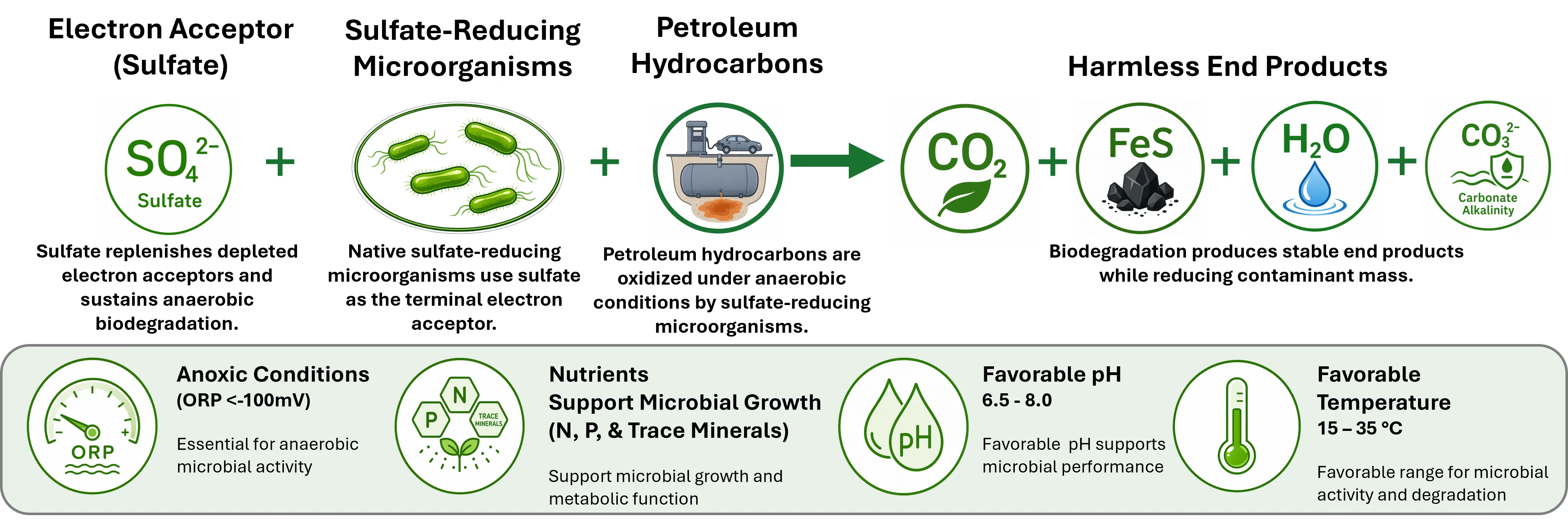
 The Right Electron Acceptor + Favorable Conditions + Active Microbes = Sustained Biodegradation
Transforming petroleum hydrocarbons into harmless end products.
Tersus products such as Nutrisulfate® Liquid and Nutrisulfate® BioBoost supply sulfate to sustain anaerobic oxidative biodegradation.
Temperature and Environmental Tolerance. Li et al. (2017) reported that sulfate-reducing bacteria can thrive across a broad range of temperatures, salinities, and pH conditions. Although temperatures of approximately 15–35 °C are generally favorable for microbial activity in groundwater remediation systems, SRB have been reported across substantially broader environmental conditions, including temperatures from 4–85 °C, salinities from 0–17%, and pH values from 4–9.5.
Why Choose Enhanced Anaerobic Oxidative Bioremediation?
- Sustains microbial activity after naturally occurring electron acceptors are depleted
- Promotes anaerobic oxidation of petroleum hydrocarbons and other biodegradable organic contaminants
- Supports long-term, in situ treatment with minimal site disturbance
- Compatible with bioaugmentation and other biological remediation technologies
- Utilizes sulfate, nitrate, or other site-appropriate electron acceptors to support long-term anaerobic biodegradation
Typical Applications
- Petroleum hydrocarbon source areas
- Dissolved hydrocarbon plumes
- BTEX and fuel oxygenate (MTBE) impacts
- Low dissolved oxygen (anoxic) aquifers
- Source zones with depleted sulfate or nitrate
- Long-term plume management and polishing
Explore Related Technologies
TECHNICAL REFERENCE
Li, X.-X., Mbadinga, S.M., Liu, J.-F., Zhou, L., Yang, S.-Z., Gu, J.-D., & Mu, B.-Z. (2017). Microbiota and their affiliation with physiochemical characteristics of different subsurface petroleum reservoirs. International Biodeterioration & Biodegradation, 120, 170–185. https://doi.org/10.1016/j.ibiod.2017.02.005
Why Parter with Tersus?
- Over 40 Years of Remediation Expertise – Practical experience helping consultants, site owners, and regulators solve complex soil and groundwater remediation challenges.
- Innovative, Field-Proven Technologies – High-performance remediation products and treatment approaches designed for a wide range of contaminants and site conditions.
- Technical Collaboration – Practitioner-led guidance throughout technology selection, design, implementation, and performance monitoring.
- Responsive Customer Support – Knowledgeable assistance from budgeting and product selection through field implementation and project completion.
- Reliable Supply & Fast Delivery – Strategically located warehouses and dependable logistics help keep remediation projects on schedule.
- Committed to Your Project Success – We measure our success by helping clients achieve effective, practical, and cost-efficient remediation outcomes.
