Canadian Patent Issued for Enhanced Reduction Bioremediation Method
The Canadian Intellectual Property Office has granted Tersus Environmental Canadian Patent No. 3,109,644, “Enhanced Reduction Bioremediation Method Using In-Situ Alcoholysis.” The patent covers a method intended to advance in situ treatment of contaminated soil and groundwater.
Issued on August 18, 2026, the patent represents Gary Birk’s seventh patent and David Alden’s sixth. Learn more about the innovation and the collaborative effort that supported the patent process.

Why Source Mass Reduction Should Come Before Plume Treatment
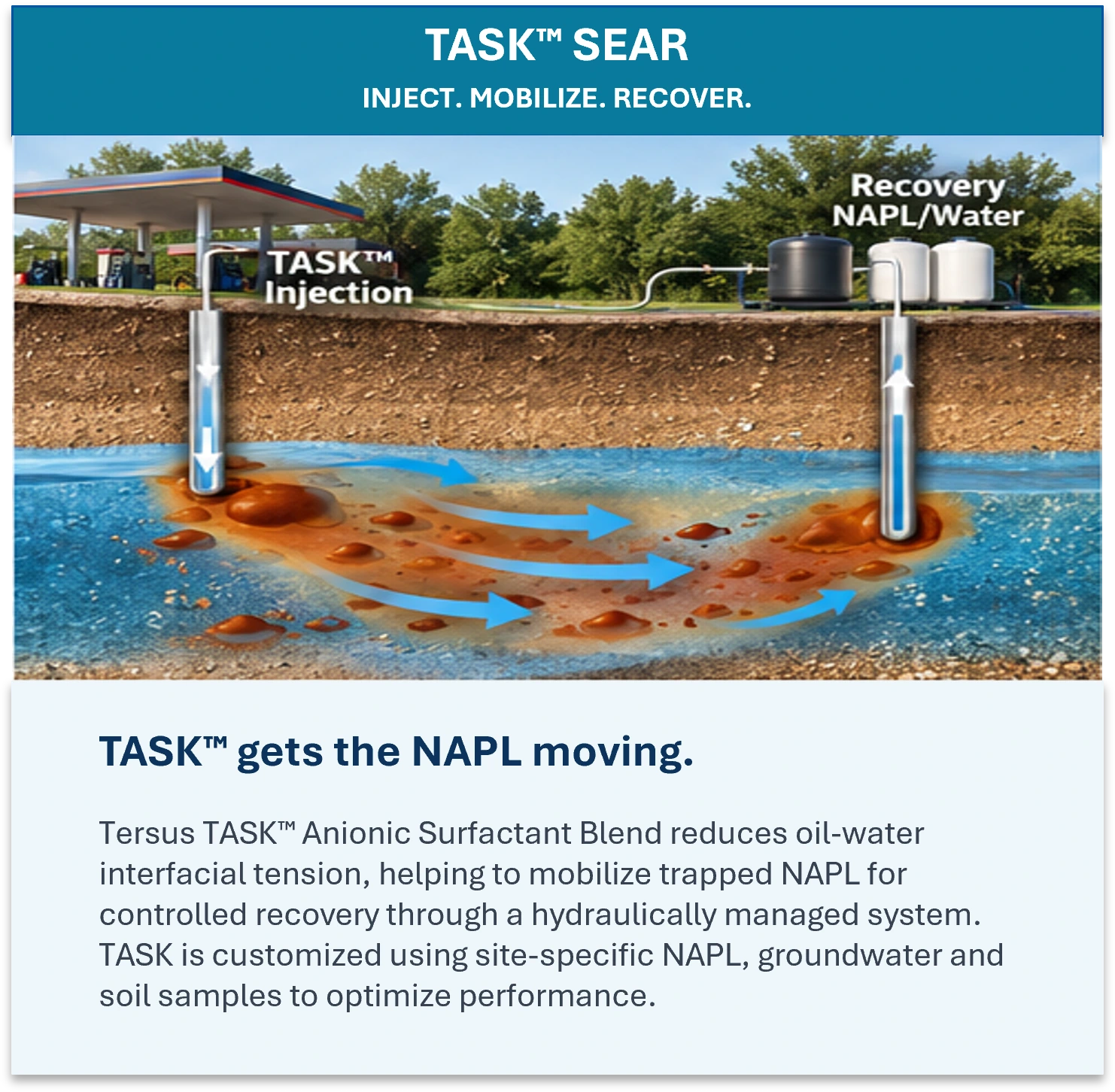
When significant NAPL remains in the subsurface, treating the dissolved plume alone may mean working against continued contaminant loading.
In this blog post, we look at why source mass reduction should come first—and how surfactant-enhanced aquifer remediation (SEAR) can help mobilize and recover NAPL before transitioning to dissolved-phase treatment.
When Petroleum Sites Stall
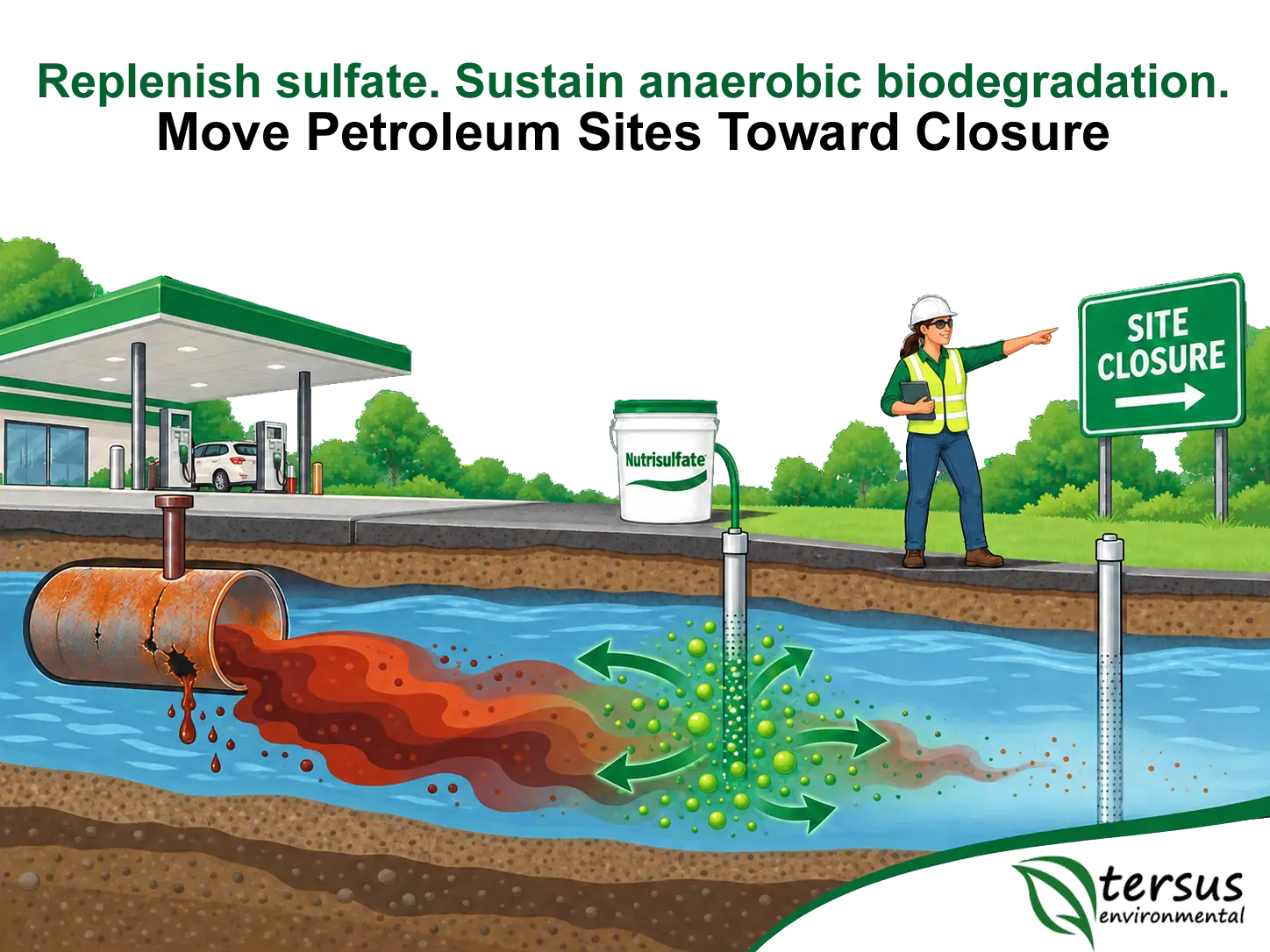
Take a fresh look at open petroleum UST releases - and the strategies that can help move stalled sites toward closure.
The ASTM E3488-25 Moving Sites to Closure (MStC) framework encourages practitioners to reassess cleanup progress and consider improved remedial strategies. When depleted electron acceptors limit biodegradation, Nutrisulfate® replenishes sulfate to help sustain anaerobic petroleum hydrocarbon biodegradation.
Tech Tip - Why Am I Seeing Acetone in My Performance Monitoring?
If you’ve ever reviewed groundwater performance data for a reductive dechlorination project and noticed acetone, you’re not alone. While not a typical monitoring target, acetone can show up under certain biogeochemical conditions, and its appearance tells us something important about what’s happening underground.

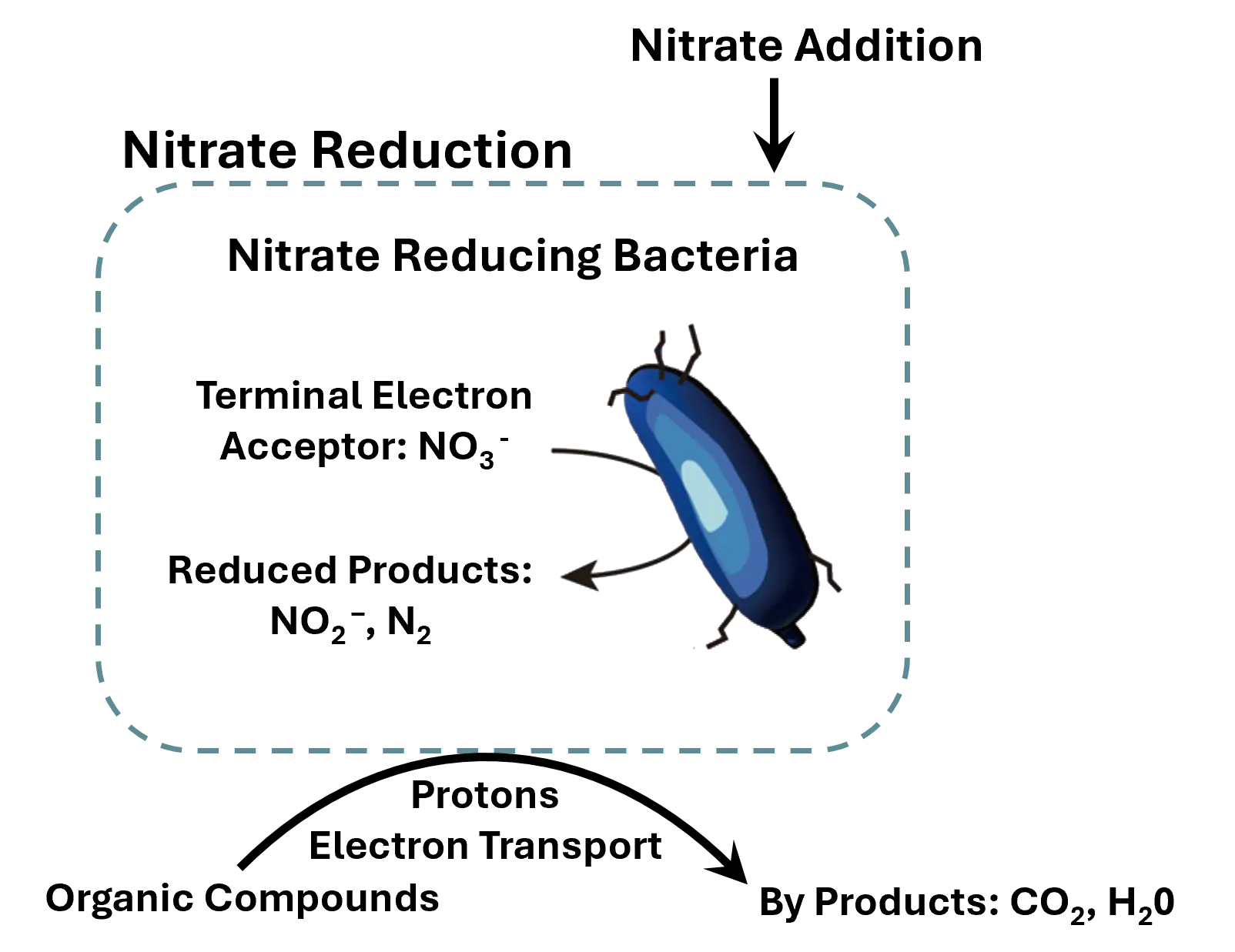
Why Nitrate Still Matters in Anaerobic Bioremediation
While sulfate is often the go-to electron acceptor for enhancing anaerobic biodegradation of petroleum hydrocarbons, the strategic addition of nitrate can offer several key benefits in biogeochemical remediation approaches targeting mixed contaminants, including chlorinated volatile organic compounds (CVOCs).